
Tourism already generates about five per cent of India’s gross domestic product, according to the Ministry of Tourism’s latest Tourism Satellite Account, yet its full power remains untapped. Domestic travel dominates that total: Indians undertook 2.509 billion trips within the country during 2023. By contrast, inbound performance remains muted. India welcomed 18.89 million international visitors last year—just 1.45 per cent of the world’s total arrivals, and 2.1 per cent of global tourism receipts. Closing this gap is essential if tourism is to realise its full role in the Government of India’s Viksit Bharat 2047 vision.
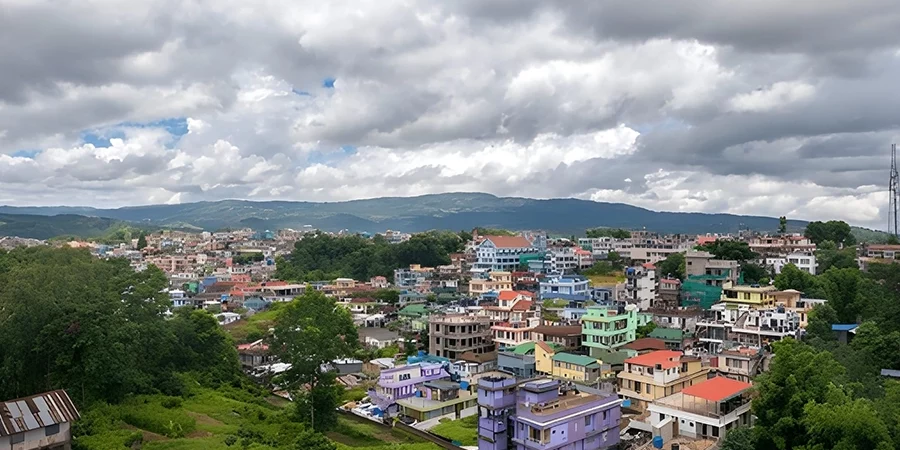
Nowhere is the shortfall more evident than in the Himalayan and North-Eastern states. These border landscapes possess unrivalled biodiversity, living cultural heritage, and geostrategic significance, yet they capture only a fraction of India’s domestic and international traffic. A robust tourism economy here would stem outward migration, strengthen frontier livelihoods, and reinforce national security while showcasing India’s soft power to the world. Unlocking their tourism economy is therefore integral to the Government of India’s Viksit Bharat 2047 vision of balanced growth, frontier prosperity, and livelihood generation.
PIF’s Responsible Tourism Vertical aims to convert this latent potential into an investable reality. The Responsible Tourism vertical aligns with the United Nations SDG Goal 8, which promotes inclusive and sustainable economic growth and decent work for all, and SDG Goal 12, which includes promoting infrastructure that is environmentally sound and contributes to sustainable development. Recognising tourism as a soft-impact, high-value revenue generator that can drive GDP growth and sustainable livelihoods, PIF’s responsible-tourism work rests on a simple but disciplined chain of causality. We begin with rigorous inputs—field surveys, secondary research, capacity-building sessions, and feasibility analyses—that generate high-quality knowledge products such as state tourism policies, investment briefs, and institutional action plans. These outputs, produced through wide-ranging consultations, equip government departments with sharper local insights and stronger implementation tools. The immediate outcomes are better-resourced institutions, stakeholder alignment, and the systematic integration of sustainability standards. Over time, these outcomes shall translate into measurable impact: evidence-based policy making, empowered communities, a portfolio of investible destinations, and, ultimately, meaningful progress toward the Viksit Bharat 2047 objectives of balanced growth, border security, and livelihood generation.
PIF incorporates a think-and-do tank in its approach, combining rigorous policy research with on-ground implementation, making it stand out from the crowd. Our engagements rest on four integrated pillars: people-centric models that secure community equity and gender-balanced skills pipelines; nature-positive planning that sets science-based visitor ceilings and finances habitat stewardship; culture-sensitive safeguards that protect and monetise intangible heritage; and market-ready execution driven by demand analytics and asset-light public-private partnerships that meet investor expectations without diluting local ownership. This framework has proven effective in Arunachal Pradesh, where PIF developed the 2019 Integrated Tourism White Paper and the Tourism Policy 2025-30 (now in force), and it is being extended through similar policy, destination-management, and investor-facilitation assignments in Bodoland, Uttar Pradesh, and Madhya Pradesh.
By uniting rigorous evidence, forward-looking policy design, and a concentrated push for private investment, PIF helps India’s most strategic landscapes deliver the economic, social, and soft-power dividends envisioned for a Viksit Bharat by 2047.