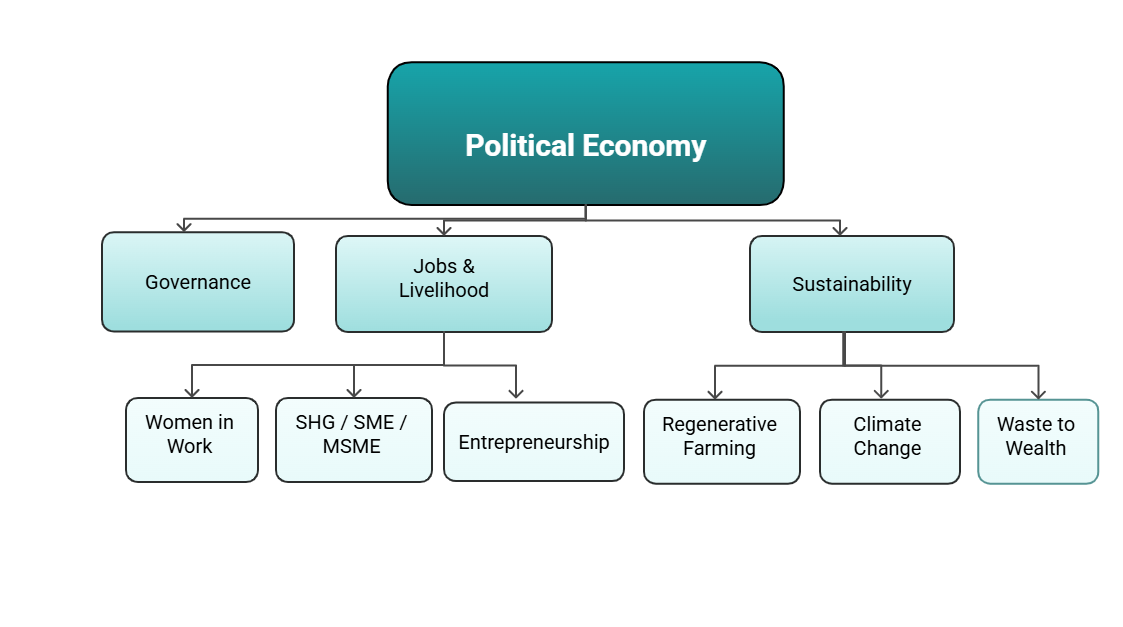
1. Governance
PIF’s governance research focuses on how institutional design and policy frameworks shape state capacity, democratic outcomes, and development effectiveness. Moving beyond descriptive analysis, the work adopts a comparative and evidence-driven approach to understand how governance systems operate in practice. This work is anchored in four integrated pillars:
- Examining electoral systems and institutional design, including comparative analysis of the First Past the Post system in India and the United Kingdom, to assess their implications for representation, stability, and policy effectiveness.
- Analysing federal governance and Centre–State dynamics to understand how administrative structures and coordination mechanisms influence policy implementation and service delivery.
- Strengthening science and technology policymaking through collaboration with the Office of the Principal Scientific Adviser to the Government of India, with a focus on institutional innovation and evidence-based decision-making.
- Assessing Corporate Social Responsibility as a governance instrument, with emphasis on uneven geographic and sectoral allocation of CSR spending and its implications for equity, accountability, and development outcomes.
2. Jobs & Livelihoods
PIF’s work on jobs and livelihoods focuses on understanding how employment is created, sustained, and accessed across sectors, with a strong emphasis on inclusion, job quality, and regional economic contexts and rural–urban linkages.. Rather than fragmented interventions, the approach examines systemic constraints and ecosystem-level solutions. This work is anchored in four integrated pillars:
- Identifying labour market barriers, skill mismatches, informality, and structural constraints affecting employment generation and income security.
- Examining traditional and cultural livelihood sectors such as handloom and handicrafts, with a focus on value-chain gaps, market access, design and technology adoption, and the sustainability of artisan livelihoods.
- Assessing livelihood models and policy interventions that can generate scalable, resilient, and regionally relevant employment opportunities across rural and urban economies.
- Strengthening rural development pathways by analysing non-farm livelihoods, local enterprise ecosystems, infrastructure access, and the role of village-level institutions in enabling income diversification.
SHG / MSME / Entrepreneurship
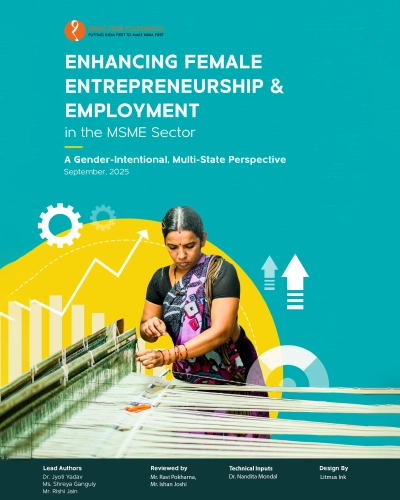
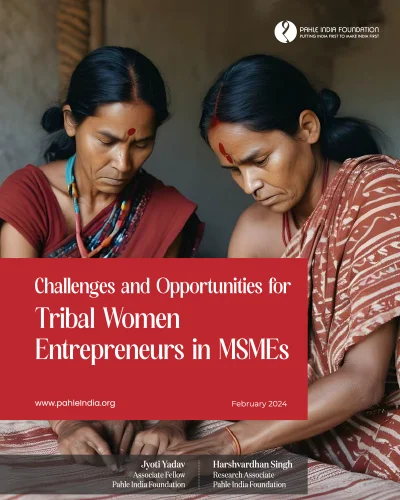
PIF’s work on SHGs, MSMEs, and entrepreneurship examines the full enterprise continuum—from collective livelihoods and micro-enterprises to growth-oriented and women-led businesses. The research focuses on how institutional, financial, and market ecosystems enable or constrain enterprise formation, formalization, and scale. Rather than assessing schemes in isolation, the approach examines how policy intent translates into enterprise outcomes. This work is anchored in four integrated pillars:
- Analysing access to formal credit, financial inclusion mechanisms, and the role of public and private financial institutions across different stages of enterprise growth.
- Assessing the impact of digital skilling, technology adoption, and market-linkage initiatives on productivity, competitiveness, and resilience.
- Identifying ecosystem enablers and scalability constraints, including regulatory, infrastructural, and market-access barriers.
- Evaluating the effectiveness of government schemes, institutional support systems, and entrepreneurship promotion policies in fostering inclusive, growth-oriented, and women-led enterprises.