Our Purpose
Why We
Are Doing
This
Creating Livelihoods and Jobs at Scale
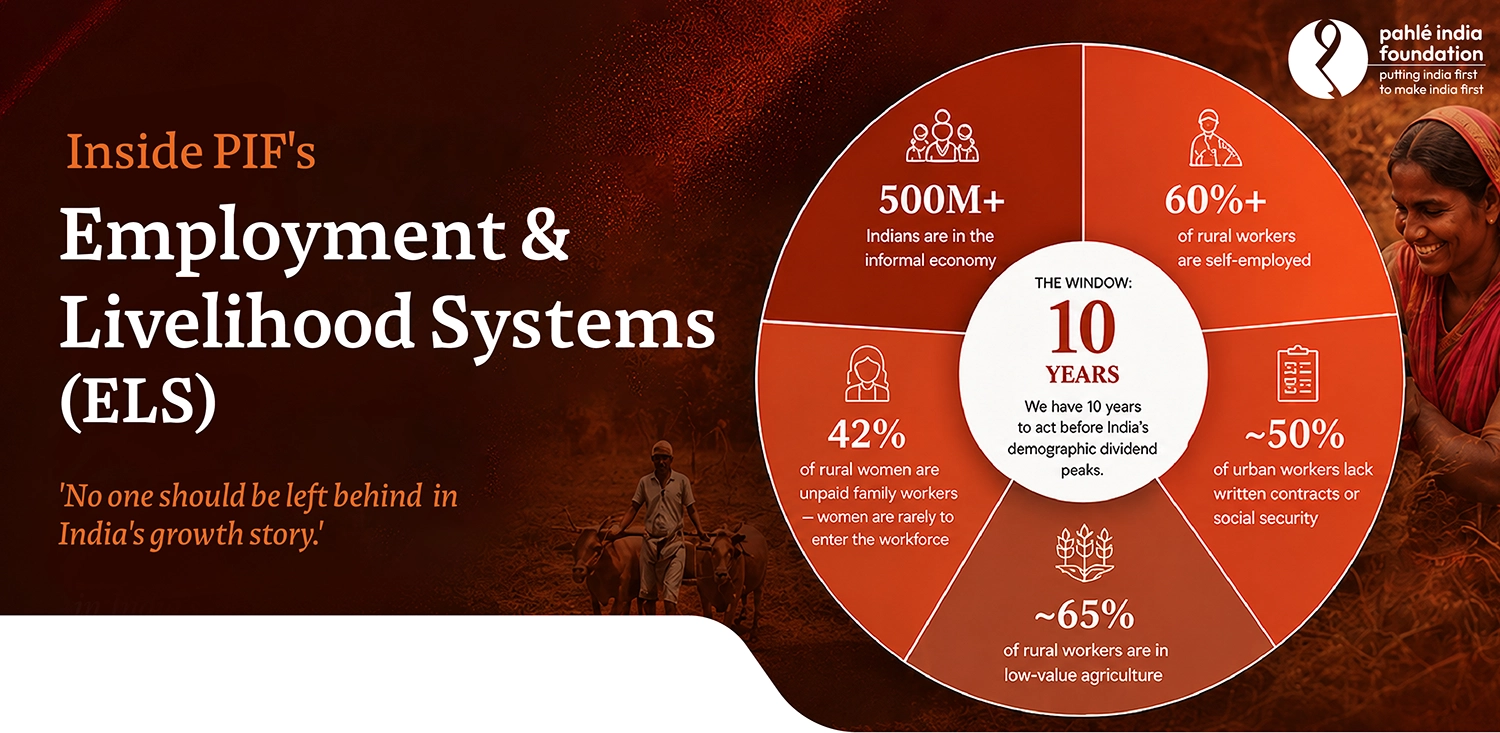
"No one should be left behind in India's growth story"
500M+
Indians in the Informal Economy
Hundreds of millions of workers lack stable income, job security, and social protection. The vast majority are rural, female, or from marginalised communities — left behind by mainstream economic growth.
Our Goal
Generate Sustainable Livelihoods & Jobs. We work to unlock dignified, income-generating opportunities for women, rural communities, and nano-entrepreneurs — creating jobs that are sustainable, scalable, and locally rooted.
Where We Focus
Cutting Across All Three


India's Workforce
Structure, Skill & Informality
Employment by Sector
Primary Sector
Self-employed 81%
Regular 1.2%
Casual 17.9%
Secondary Sector
Self-employed 28.7%
Regular 26.8%
Casual 44.5%
Tertiary Sector
Self-employed 44.3%
Regular 51.4%
Casual 4.3%
Skill Landscape
IT-ITeS, textiles, handloom, and apparel together account for nearly 45% of all training. About a third of all skilled individuals are trained in IT-ITeS alone.
22%
of skilled individuals are outside the labour force
8%
remain unemployed despite training
Problem Statements
The Challenges We Address
Farmer Income
Creating stable income sources for rural households. Strengthen rural non-farm livelihoods by building market linkages and reviving FPOs and SHGs.
Nano-Entrepreneurs & Small Businesses
Empowering nano-entrepreneurs through market access, digital and technological skilling, financial inclusion, and institutional support to generate jobs at scale via SRLMs and SHGs.
Soil Health
Improving soil quality and fertility for sustainable farming and enquiring carbon sequestration potential.
Non-Farm Income
Strengthening rural non-farm livelihoods by building robust market linkages and reviving Farmer Producer Organisations and Self-Help Groups.
Cross-Cutting Themes
Women's Participation
Raising women's participation in the labour force.
Skill Development
Driving systemic change in India's skill development model.
Traditional Sectors
Integrating traditional sectors in conventional market systems.
Soil & Carbon
Assessing carbon sequestration potential alongside sustainable farming.
Employment Landscape
The Case for Acting Now
Rural India
60%+
Self-employed rural workers
10-year window to build dignified livelihoods (PLFS 2023–24)
42%
Rural women — unpaid family workers
Women are ready to enter the workforce; now is the time to act (PLFS)
~65%
Rural workers in low-value agriculture
Moving them into better work is this decade's defining task
Urban India
~50%
Urban workers in regular salaried roles
Yet over half lack written contracts and social security
>50%
Without job security benefits
Among salaried employees — pointing to deep informality (PLFS 2023–24)
10yr
Window to act
Before AI & automation pressures on white-collar jobs compound
The Structural Implication
A structural shift from primary to tertiary sectors is happening — but too slowly to absorb India's workforce surge. The priority: faster movement into productive non-farm work and better wage-job growth. The Paradox — deep informality persists even in salaried urban roles, while AI and automation now threaten white-collar jobs too.
Track Record
Previous Work
Ministry of MSME
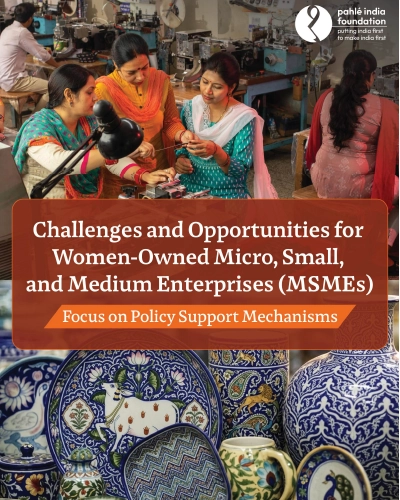
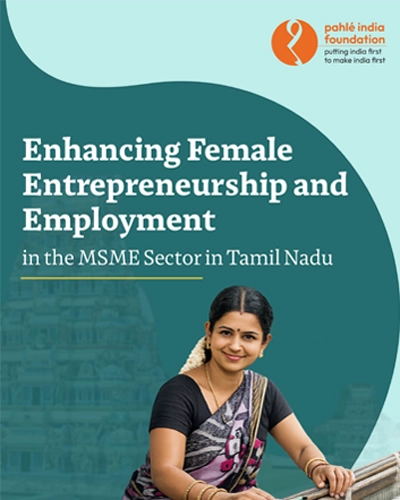
Challenges and Opportunities for Women-Owned MSMEs — Focus on Policy Support Mechanism
In-depth examination of barriers and enablers for women-owned micro and small enterprises.
DelhiRajasthan
Gates Foundation
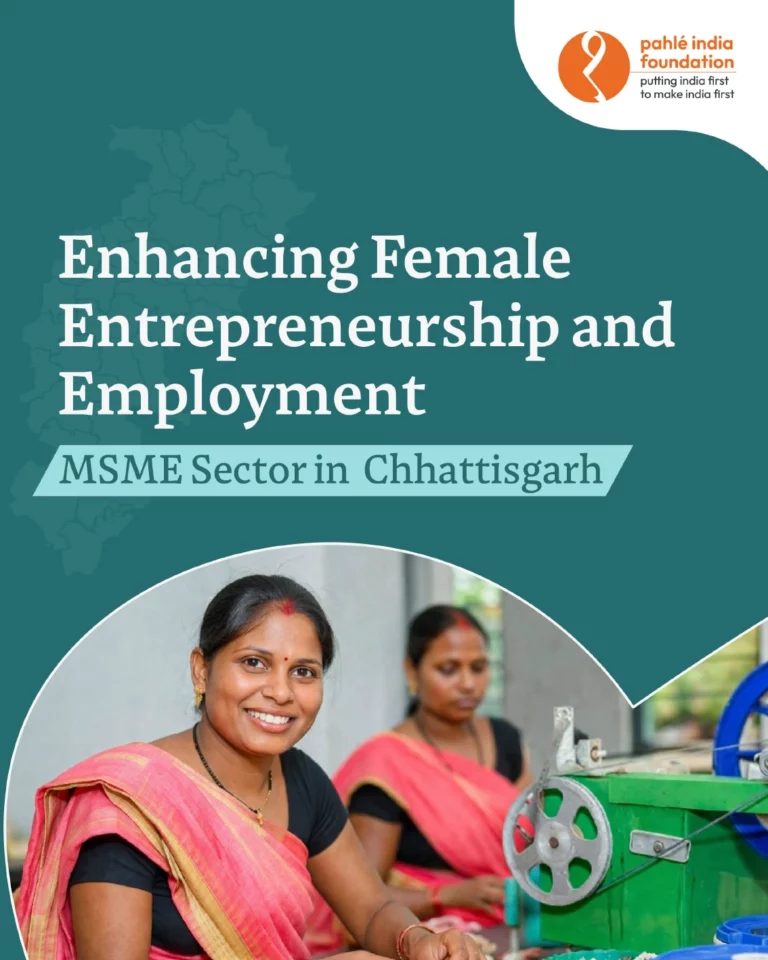
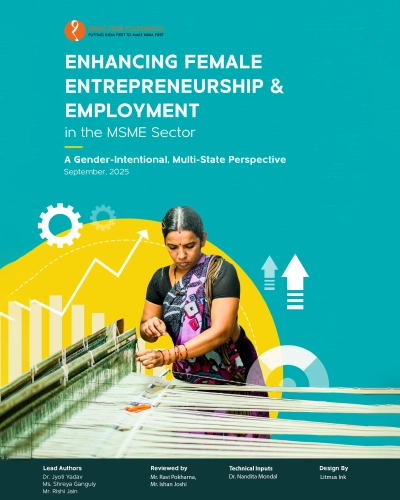
Female Entrepreneurship & MSME Employment
Comprehensive study on female entrepreneurship across six states, examining ecosystems and employment outcomes.
ChhattisgarhGujaratMaharashtra
OdishaTamil NaduUttar Pradesh
CSR Project
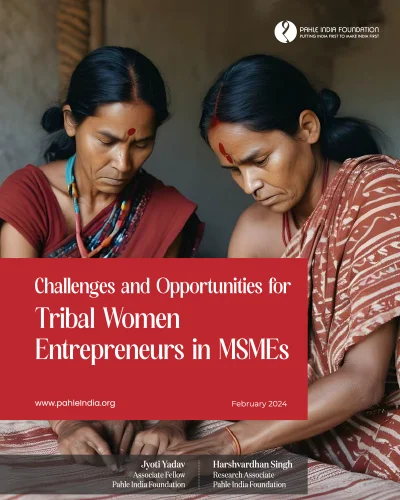
Challenges and Opportunities for Tribal Women Entrepreneurs in MSMEs
Focused research on tribal women entrepreneurs navigating the informal MSME sector.
ChhattisgarhJharkhand
MUFG
Conception Report on Regenerative Farming: Is It The Way Forward for Agriculture in India?
Foundational research on the potential for regenerative farming practices to transform Indian agriculture.
Gujarat
Key Findings
Research Insights: Informing Our Strategic Pillars
90%
of micro enterprises in craft clusters have never accessed formal credit — informal borrowing remains the only route
4%
of scheme-aware entrepreneurs actually benefited from any government scheme. Awareness exists; access does not
$1.7T
estimated credit gap facing informal and micro enterprises in India, driven by collateral requirements and lender bias
94%
of surveyed artisan units want to grow — informality and stagnation are products of structural friction, not lack of ambition
62%
cite complex procedures as the primary reason for not accessing schemes; corruption and middlemen follow closely
30%
use any form of digital bookkeeping — UPI adoption is high but financial management skills remain very weak
1%
of surveyed enterprises export directly — nearly all remain confined to local or domestic markets
4
Strategic pillars: Financial Inclusion, Skill Development, Market Access, Policy & Institutional Support
How This Informs Our Approach
Financial Inclusion
Collateral requirements, thin credit histories, and lender bias create near-total exclusion of micro producers from institutional finance — pushing them into costly informal borrowing.
Skill / Tech Development
Training pipelines are weak and rarely connect to employment or markets. Digital literacy gaps mean most artisans can transact digitally but cannot manage, price, or sell digitally.
Market Access
Cluster-based producers remain locked in local markets, excluded from organised retail, public procurement, and export channels. Supply chain positioning is at the lowest-value rung.
Policy & Institutional Support
A wide architecture of schemes exists but last-mile delivery consistently fails. Procedural complexity and poor DIC outreach leave most artisans outside the system entirely.
Agriculture
Ongoing & Upcoming Projects
Phase II research deepening our understanding of regenerative farming, soil health, and livelihood outcomes.
MUFG — Phase II
Regenerative Farming: Is It the Way Forward for Agriculture in India?
📍 Gujarat
Household-level data on land use and socio-economic parameters; field testing for soil, water, and crop parameters with ICRISAT.
OutcomeFarm-level income mapping and soil health/carbon sequestration assessment.
Diageo
Impact Assessment of Afforestation in Alwar, Rajasthan FY25–26
📍 Alwar, Rajasthan
Household surveys on livelihood opportunities; monitoring afforestation site health; soil testing with ICAR, New Delhi.
OutcomeIncome pattern mapping and soil health/groundwater contamination assessment.
NMNF-IIFSR Modipuram
Enhancing Soil Health and Carbon Sequestration through Natural Farming
📍 Madhya Pradesh
Household data on land use and carbon sequestration potential; soil testing with ICRISAT under natural farming systems across agro-climatic zones.
OutcomeFarm income dynamics and soil carbon sequestration potential.
BCI — Upcoming Phase III
Status of Soil Health of BCI Licensed Farmers in India
📍 Punjab · Maharashtra · Andhra Pradesh · Karnataka · Gujarat · Rajasthan · Telangana
Field testing for soil components with ICRISAT across 7 states covering BCI cotton farmers.
OutcomeSoil carbon sequestration potential of BCI cotton farmers.
Proposed Collaboration
PIF × ICAR-IARI: Adaptive Natural Farming Project
"Adaptive natural farming for preventing nutrient mining, enhancing climate resilience, and improving economic feasibility for large-scale farmer adoption"
PIF RoleEvaluate economic viability, ecosystem service payments, and carbon credit potential. Lead economic and livelihood impact assessment.
MethodologyRandomised Control Trial (RCT) with longitudinal tracking across diverse agroclimatic zones.
ICAR-IARI RoleLead technical interventions for natural farming implementation. Provide agronomic expertise and field trial management.
Our Strategy
Outcome of Our Work
Our strategy aims to drive systemic, scalable change across livelihoods and agriculture.
Women's Livelihoods
Improve women's livelihood and income opportunities by strengthening participation in viable enterprise ecosystems.
Formalisation
Enable transition from informal activity to formal micro-enterprise through registration, financial readiness, and market integration.
Traditional Sectors
Strengthen traditional sectors through improved productivity, enterprise formalisation, and better access to conventional and digital markets.
Agriculture Impact
Assess carbon sequestration potential of Indian soils, regenerative farming's role in raising farmer incomes, and allied sector livelihood diversification.
OUR TEAM







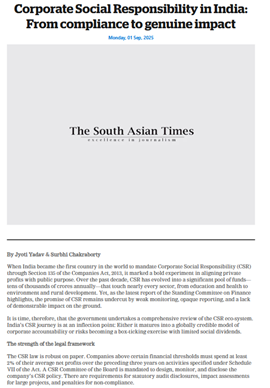
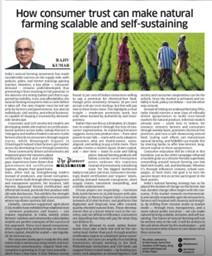
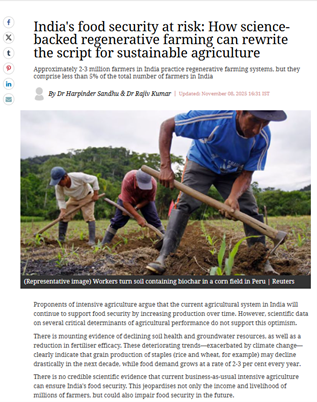
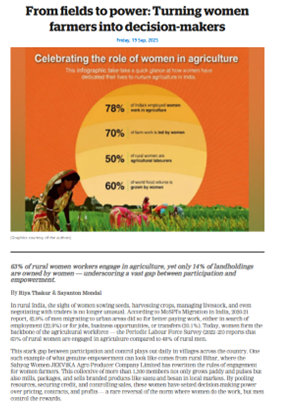
Driving Influence through Op-eds